Picture this: your caravan has done perhaps a dozen trips this year. A few weekends in spring, a fortnight in August, a couple of autumn outings. Low mileage, light use, surely ageing gracefully? In reality, that van is quite possibly deteriorating faster than a car driven daily. The panels are fading, the decals look a decade older than the registration, and the seals have developed a worrying grey pallor, and none of it happened on the road.
Most owners assume that a vehicle used occasionally must be in good shape simply because it is not being worn out. The opposite is often true. Sitting still in the sun is one of the most destructive things that can happen to a caravan’s exterior, seals and interior. This article explains how UV rays and heat are silently attacking your van right now, and then gives you a short, realistic set of habits to protect your caravan from sun damage at home and on-site. If you want to go further into specific products and step-by-step routines, RV Parts Express has an in-depth UV protection guide worth bookmarking once you have read this.
Why ‘just a few weekends a year’ caravans can age faster than daily drivers
There is a quiet paradox at the heart of leisure vehicle ownership. The tow car gets washed, driven regularly, and often garaged or at least moved around, while the caravan sits on the driveway or a storage hardstanding for weeks at a time, in full sun, with nobody looking at it closely enough to notice the slow degradation.
The problem is made worse by where caravans typically live between trips. A concrete driveway with no shade, a coastal storage field battered by salt air and UV in equal measure, or a farm hardstanding where grime and wind grind away at the finish. In all of these situations, the same side of the van faces the midday sun day after day, so one flank, the roof and the skylights absorb a sustained and concentrated dose of radiation that a car in regular motion never quite experiences.
Maintenance habits compound the issue. Covers tend to go on in October and come off in March, with little attention paid in between. Bird droppings, tree sap and salt spray are left to bake on rather than being rinsed off promptly, and seals, tyres and roof lights go unchecked between seasons. Unlike a modern car, which typically has a tough multi-layer paint system, many caravans rely on gel-coated fibreglass panels, printed vinyl decals and acrylic windows that are particularly vulnerable to sustained UV exposure. Once the damage starts, it becomes visible quickly.
How UV and heat quietly wreck paint, plastics, seals and interiors
The mechanism is worth understanding at a basic level, because once you see it clearly you stop underestimating it. UV-A and UV-B rays are energetic enough to break the chemical bonds in paint pigments and the polymer binders of clear coats and gel coats, a process called photodegradation. Heat accelerates the reaction and causes panels to expand and contract repeatedly, creating micro-fractures in the surface, so together the two forces are far more destructive than either one alone.
On paint and gel coat, the journey is predictable: deep gloss fades to a flat, patchy appearance, and eventually you wipe your hand across the surface and find a white chalky residue on your fingers. That powder is the oxidised remnant of the outer coat breaking down. Once it reaches that stage, polishing can restore a surface only so far, because below a certain threshold there is simply not enough material left to work with.
Decals and graphics go earlier than the paint itself. The colours fade and the edges begin to lift or crack, which is why so many caravans look cosmetically tired long before they have any mechanical issues worth worrying about.
Rubber seals, window rubbers and corner trims suffer from a slightly different mechanism. UV light triggers the formation of ground-level ozone, which reacts aggressively with rubber, causing it to dry out, turn grey and develop fine surface cracks. Windows and doors start to stick, and eventually the seal loses enough flexibility to do its job, at which point water finds a way in.
Roof lights and acrylic skylights follow a familiar path: clear to yellowed to faintly cloudy, with a rougher surface texture and, in more advanced cases, a pattern of fine spider-web cracks known as crazing. At that point they become a potential leak point.
Tyres are another casualty that owners often overlook until it is too late. A caravan tyre with plenty of tread but several seasons of driveway sun exposure can develop sidewall cracking and stiffness that signals genuine structural risk, quite separately from tread wear. Awning fabric follows a similar pattern, becoming thin, faded and prone to tearing under stress.
Inside the van, large windows act like a greenhouse, concentrating heat and UV onto fabrics, curtains and cushions until the sunny side bleaches noticeably. Dashboard plastics and interior trims warp or develop hairline cracks, adhesives soften and fittings loosen. Almost all of this happens while the van is sitting still, which is precisely why so many caravan owners are caught off guard by how much ageing has occurred between one season and the next.
Simple ways to protect your caravan from sun damage when it is parked at home
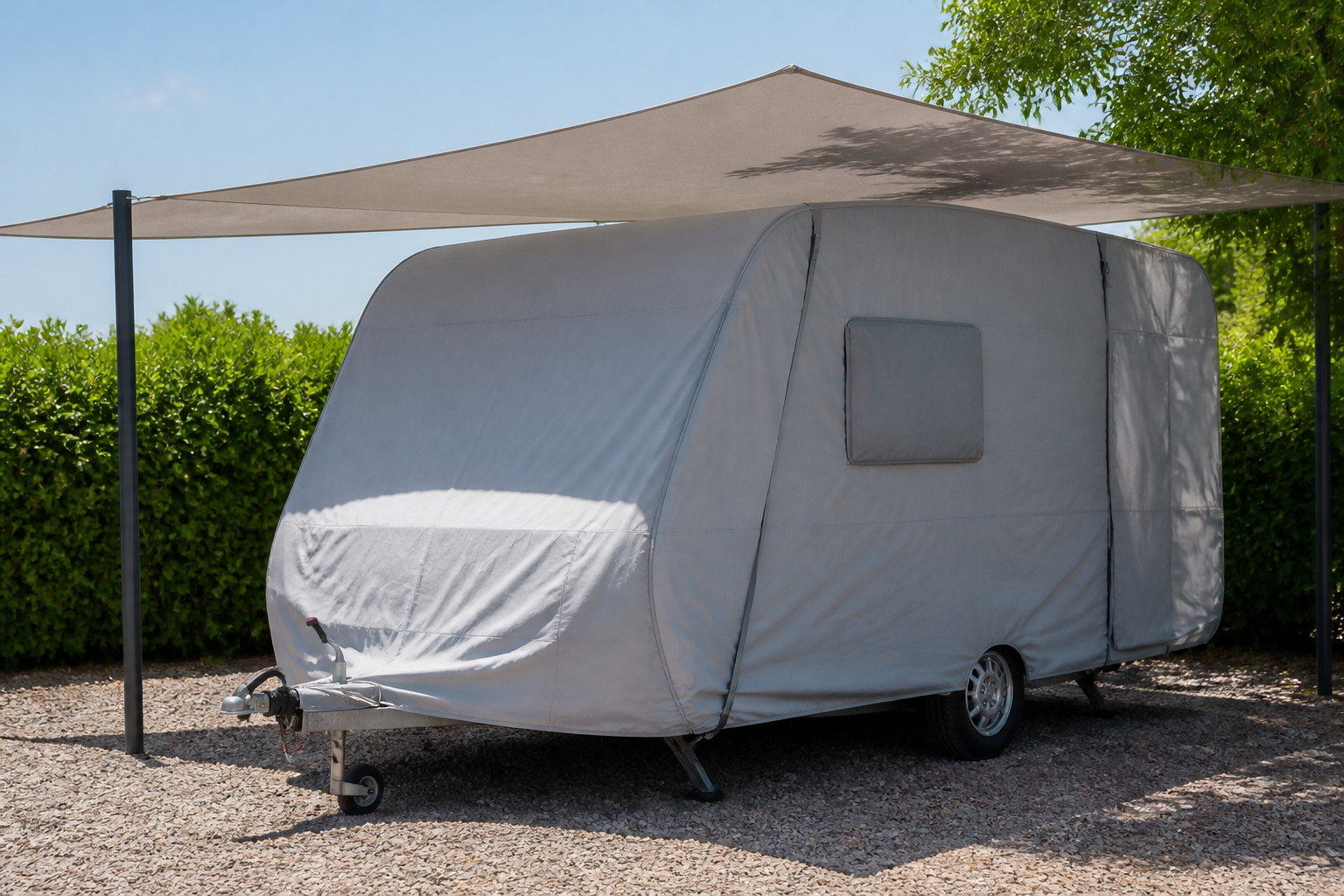
The single most effective thing you can do costs nothing: park thoughtfully. If there is a spot beside a building, hedge or carport that puts the van in natural shade for most of the day, use it. Better still, rotate the van a couple of times a year so the same flank is not always taking the full force of the sun. It takes five minutes and meaningfully extends the life of the finish.
If shade is not available and you are leaving the van for several weeks, a good caravan-specific cover is worth the investment. The critical word is breathable. A cheap, non-breathable tarp traps moisture against the surface, encourages mould and can cause more damage than it prevents. The cover also needs to fit the van properly; a loose, ill-fitting cover will shift in the wind and scuff the finish. Always wash the van before fitting a cover for a long period, so you are not sealing grime against the gel coat or paint.
For the exterior surface itself, a twice-yearly application of a caravan-safe wax or synthetic sealant on painted or gel-coated panels creates a sacrificial layer that absorbs UV rather than letting it reach the finish beneath. Exterior plastics and trims respond well to a UV-protective dressing applied on the same schedule. Neither task takes long, and both are the kind of light effort that prevents expensive repairs later.
Wheels and tyres are easy to overlook. Simple tyre covers significantly reduce UV and ozone exposure during long idle periods, and occasionally moving the van just a short distance changes the tyre contact patch, which helps prevent flat-spotting. When you do clean the tyres, apply a proper rubber conditioner rather than a greasy, petroleum-based dressing, since petroleum-based products can actually accelerate cracking over time.
Seals and skylights deserve their own quick routine. Gently clean rubber seals with a mild soap solution a couple of times a season, then apply a silicone-compatible conditioner to keep them supple. Lubricate the hinges and mechanisms on roof lights and hatches at the same time.
The cleaning routine itself does not need to be elaborate. A gentle wash every month or so through the sunnier months, using a caravan-friendly shampoo, removes the bird droppings, tree sap and salt spray that the sun would otherwise bake onto the surface and etch into the finish. Speed matters here: the sooner a deposit is removed, the less damage it causes.
If you want specific product recommendations and a more detailed step-by-step approach to coatings, seal treatments and accessories, RV Parts Express’s UV protection guide is a practical next stop.
Simple ways to protect your caravan from sun damage when it is parked at home
Keeping sun damage in check on-site and on the road
Pitching up is not just about finding level ground. One of the most useful habits a caravan owner can build is thinking briefly about where the sun will be in the afternoon before unhitching. Parking so that the glazed side faces away from the strongest afternoon sun, or using a nearby building or trees for natural shade, costs nothing and reduces the UV load on both interior and exterior surfaces meaningfully. Just be mindful of trees that drip sap or attract birds, since those deposits baking in the sun create their own problems.
Putting the awning out is not only about comfort; it shields one side of the van from direct sun for large parts of the day. On exposed pitches where the awning alone is not enough, a shade sail or windbreak positioned to protect specific windows or panels is a low-cost addition that pays for itself in reduced fading.
Inside the van, reflective window screens and drawn blinds on the sunniest side make a real difference to heat build-up and interior UV load. The interior of a caravan in direct summer sun can reach temperatures that warp trims, soften adhesives and bleach soft furnishings surprisingly fast, so cracking roof lights onto their latch position when it is safe to do so, keeping vents clear and running a small fan on low all help the interior stay closer to ambient temperature rather than becoming an oven.
Two brief walk-rounds are worth building into every trip. On arrival, take a minute to glance at roof lights and seals for obvious cracks, feel key plastics for brittleness, and wipe off any fresh bird mess or bug splatter from the front before the sun gets to it. On departure, walk slowly around the van before leaving the site and look for newly faded patches, lifting decal edges, small cracks in sealant around windows or roof fittings, and any change in tyre appearance. Catching these things at the van, while you are already looking, means you can deal with them at home before the next trip rather than discovering a bigger problem at the end of next season.
Spot the early warning signs and keep a no-fuss sun protection routine
UV damage announces itself before it becomes irreversible, if you know what to look for. Outside the van, watch for paint or gel coat that looks flat and powdery rather than glossy, a white residue on your fingers after wiping a panel, decal edges that are lifting or showing fine cracks, exterior plastics that have gone from smooth to dry and faintly rough, rubber seals that look grey or feel stiff and brittle when pressed, and roof lights that have shifted from clear to yellowish or show fine spider-web crazing. Any of these is a signal to start a protection routine before the surface deteriorates further.
Inside, look for soft furnishings with ghostly outlines where objects shielded them, one side of the interior noticeably more faded than the other, dashboard or trim panels starting to warp or show hairline cracks, and blinds that have turned brittle or discoloured.
Some issues need attention now rather than later. Active leaks or damp patches around windows or roof fittings, badly perished seals, deep cracks in skylights, severe tyre sidewall cracking anywhere near the cords, and extreme chalking where the surface is visibly breaking apart all fall into this category. Others can be monitored while you start a protection routine: mild fading, light chalkiness that still polishes back, early decal curl and slight cloudiness on plastics are all signs you have caught the problem early enough to address without major expense.
The routine that keeps all of this at bay is genuinely short. Park in the best available shade, or use a breathable, well-fitted cover for long idle periods. Rinse the van and remove any sap, salt or bird mess after dirty or coastal trips, and give it a proper wash monthly through the warmer months. Apply a protective product to paint, plastics and seals twice a season. Fit wheel or tyre covers when the van will sit for several weeks, and do a five-minute walk-round before and after every trip.
None of that is onerous. Your weekend escape vehicle is not being ruined by dramatic events; it is being worn down by the quiet, daily attention of the sun. A few consistent habits are the difference between a brittle, chalky caravan that feels every one of its years and one that still looks and feels like a proper escape pod years from now. Knowing how to protect your caravan from harmful UV rays in more depth covers the specific products, coating options and detailed how-tos that turn these habits into a complete protection plan.